Today’s chosen theme: Seasonal Watering Guidelines for Houseplants. Welcome to a friendly, practical space where we turn changing weather into confident care. Learn how light, temperature, and growth cycles shape every sip your plants need, and join our community by sharing your seasonal wins, questions, and experiments.
As daylight lengthens, plants photosynthesize more and transpire faster, pulling moisture from soil at a brisk pace. Cooler months slow metabolism, meaning the same plant may need half the water it used in July. Share your climate and plant mix so we can compare patterns together.
Warm air speeds evaporation, while airflow and pot material change how quickly moisture escapes. Terracotta breathes and dries faster; glazed pots hold moisture longer. In winter, compacted mixes can stay wet too long, so gently aerating the surface helps roots breathe without overwatering.
One winter, a usually dramatic peace lily stopped asking for water every four days and drooped only after ten. Slowing watering rescued it from mushy roots, and a simple notebook reminder prevented guesswork. What quiet seasonal shift surprised you this year? Tell us below.
Restart Moisture Gradually
Begin by shortening the dry window rather than soaking heavily at once. Use finger checks or a moisture meter to avoid overshooting. Aim for slightly deeper waterings with proper drainage, then wait until the top inch dries. Tell us which plant wakes up first in your home.
In spring, nutrients travel with moisture. Use a diluted, balanced fertilizer with every second or third watering to gently fuel growth. Flush the pot occasionally to prevent salt buildup, especially for sensitive species like calatheas and ferns, which appreciate steady, clean hydration.
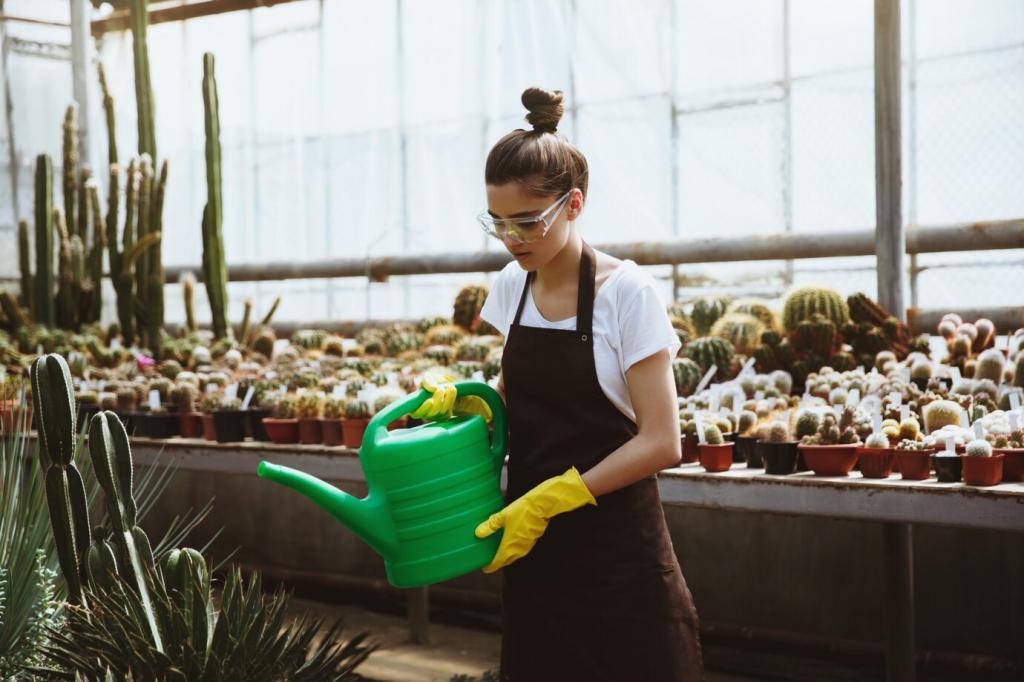
Watering at dawn reduces leaf scorch and gives plants a full day to drink. Bottom-water thirsty specimens to rehydrate hydrophobic soil, then drain completely. Keep saucers dry after fifteen minutes. What’s your hottest room, and how do you keep pots from drying like desert sand?
Humidity Hacks Without Overwatering
Increase humidity with pebble trays, grouped plants, and gentle airflow rather than constant soaking. Mist only species that tolerate it, and never as a substitute for proper root hydration. A small fan prevents fungal issues while helping soil dry evenly between healthy, summer-strength waterings.
Real-World Lesson from a Balcony Monstera
My balcony monstera wilted every Sunday until I shifted to deeper Saturday morning soaks and midweek checks after heatwaves. Paired with shade cloth and a moisture meter, the plant unfurled flawless leaves. Share your hottest-day routine so others can borrow your smartest summer tricks.
Reduce frequency gradually, extending the days between waterings rather than cutting volume drastically. Cooler, dimmer rooms keep soil moist longer, so wait for the top two inches to dry. A moisture meter helps eliminate guesswork when your calendar alone can’t track shifting autumn needs.
Autumn: Slow the Flow
Late autumn is rarely ideal for repotting, which can stress plants as growth slows. If roots circle tightly, consider a minimal root tease and improved drainage, then maintain careful watering. Tell us which plants you leave for spring repots and how that decision changes your watering plan.
Winter: Minimal, Mindful Sips
Dormancy and Cool Rooms
Most houseplants slow growth in winter, asking for fewer, smaller waterings. Use room-temperature water to avoid chilling roots, and never water cold soil late at night. Lift pots to gauge weight; a lighter pot signals thirst more reliably than surface moisture alone during this quiet season.
Dry Air Versus Dry Soil
Radiators and heaters parch leaves, not just soil. Crisp tips may signal low humidity rather than underwatering. Raise humidity while keeping soil moderately dry between sips. Humidifiers, trays, and distance from heat sources protect foliage without pushing overly wet mix into dangerous territory.
Story: Reviving a Snake Plant
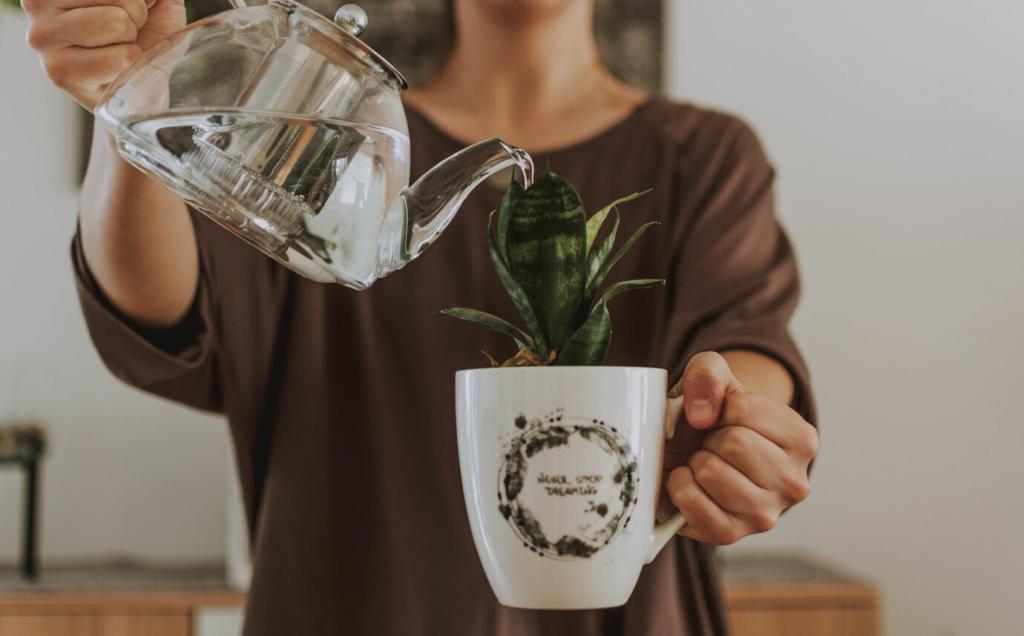
I once watered a snake plant monthly all winter, then noticed a soft leaf—too much for the slow season. Extending intervals to six weeks and using less volume restored firmness. Share your winter rescue stories, and subscribe for our monthly reminders tailored to tougher cold spells.
Yellowing leaves, mushy stems, algae on soil, and fungus gnats often flare in cool, dim months. Improve drainage, lengthen intervals, and increase airflow. If rot appears, prune softly, repot in fresh mix, and restart with careful, seasonal watering discipline. Ask questions; we’ll troubleshoot together.